10 Easy Basic Crochet Stitches Every Beginner Should Know
- The 10 stitches:
- Foundation stitches
- Tall basic crochet stitches
- Textured basic crochet stitches
- Heights cheat sheet
- Practice plan
- Stitch FAQs
Almost every crochet pattern is built from a small set of core stitches. Learn these ten and you can follow the vast majority of beginner and intermediate patterns with confidence. These are the basic crochet stitches every crocheter uses weekly, presented in the order you should learn them.
Learn alongside our 7-day starter guide, which schedules these stitches across a week. Then test them in real makes like crochet flowers and the market bag.
Foundation basic crochet stitches: chain, slip, single
1. Slip knot. The anchor for everything. Loop, pull through, tighten on the hook. Every project starts here.
2. Chain (ch). Yarn over, pull through. Chains form foundations, spaces and lace. Practice until loops are even without thinking.
3. Slip stitch (sl st). Insert, pull through both loops at once. Joins rounds, moves across fabric invisibly, finishes edges. The quietest of the basic crochet stitches and one of the most used.
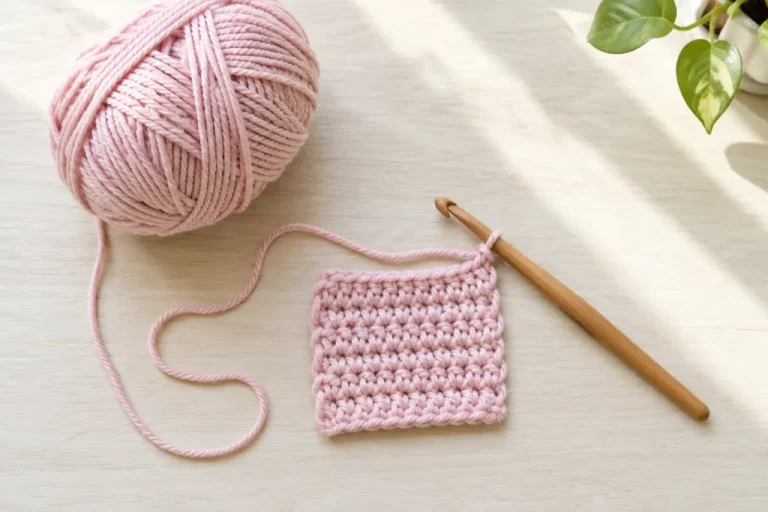
4. Single crochet (sc). Insert, pull up a loop, yarn over, pull through two. Dense, sturdy, the default fabric for toys and bags. Master this first; everything taller is a variation on its rhythm.
Tall basic crochet stitches: growing height
5. Half-double crochet (hdc). Yarn over first, then insert and finish three loops at once. Slightly taller than single crochet with a neat horizontal bar. Great for hats and dense blankets.
6. Double crochet (dc). Yarn over, insert, pull up, finish in two steps of two. Twice the height of single crochet, the engine of blankets, mesh and granny squares. This hardworking stitch appears in patterns most.
7. Treble crochet (tr). Two yarn-overs for triple height. Airy lace, tall borders, dramatic drape. Learn it after double feels automatic.
Textured basic crochet stitches: dimension and edges
8. Increase (inc). Two stitches in one: the shaping behind every circle, sphere and widening edge. Paired with stitch counts, increases are how flat yarn becomes 3D toys.
9. Decrease (dec / sc2tog). Two stitches worked as one for shaping crowns, waists and toy heads. The invisible decrease, worked in front loops, hides the join in amigurumi.
10. Magic ring. An adjustable starting loop for centre-out rounds. No hole in hat crowns or toy heads. Fiddly for exactly one afternoon, then second nature forever. These textured basics complete your starter set.
Hook sizes shape every stitch above: compare systems on the Craft Yarn Council hook chart so patterns from any country work with your tools.
Stitch heights cheat sheet
Memorise this ladder: chain (foundation), slip stitch (flat), single (short), half-double (medium), double (tall), treble (tallest). Turning chains match height: 1, 0, 1, 2, 3, 4. When a pattern says a row looks wrong, nine times out of ten the turning chain is the culprit. Tape this ladder inside your project bag until it sticks.
Height also controls drape. Dense single crochet stands stiff for bags and toys. Tall treble rows flow for shawls and summer tops. Choosing height deliberately, rather than by habit, is the quiet leap from following patterns to understanding these basic crochet stitches.
A practice plan for these basic crochet stitches
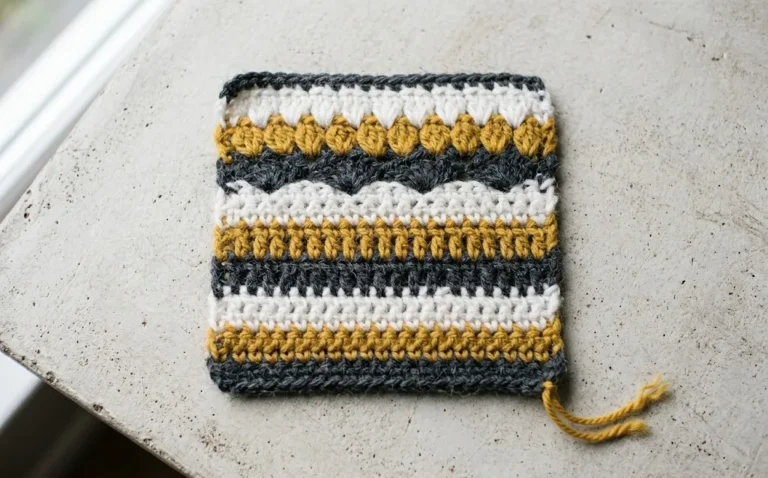
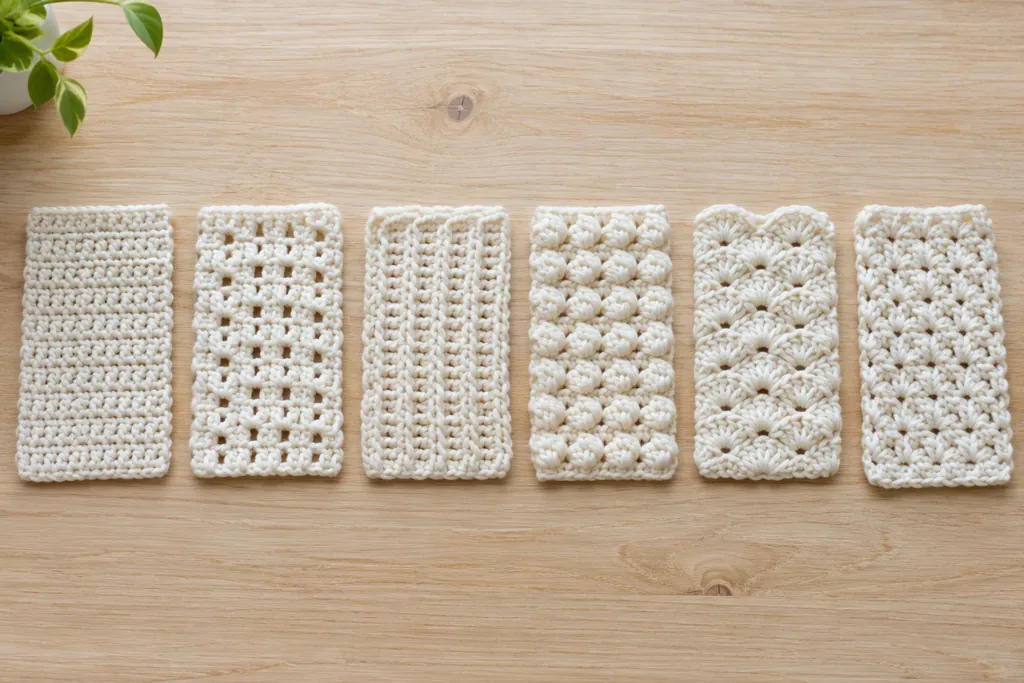
Make one 15×15 cm swatch per stitch family: one for foundations, one tall-stitch sampler with two rows of each height, one textured square practising increases and decreases. Label each with yarn, hook and date. In a month the stack shows your progress stitch by stitch.
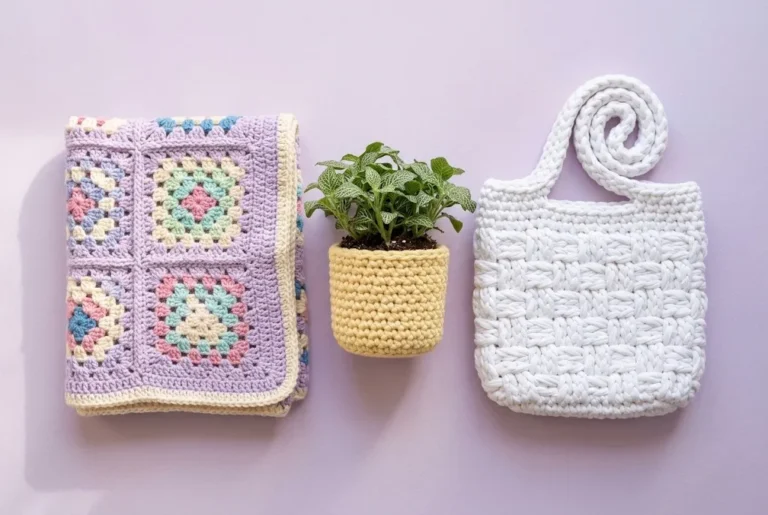
Then combine: a granny square uses chains, slip stitches and double crochet in one classic motif. A washcloth drills even tension. A flower applies rounds and shaping. Real mini-projects cement skills faster than isolated drills ever could.
Basic crochet stitches: FAQs
Which stitch should I learn first?
Chain, then single crochet. Those two alone make scarves, washcloths and simple bags. Add double crochet third and most beginner patterns open up.
Why do my edges slant?
Missed turning chains or skipped edge stitches. Count every row and chain the turning height each stitch needs: 1 for single, 2 for half-double, 3 for double. Straight edges are pure bookkeeping.
US vs UK terms?
They differ by one height: US single crochet equals UK double crochet. Always check a pattern’s system first. All our guides, including this one, use US terms throughout.
Ten basic crochet stitches, three practice swatches, endless patterns unlocked. Chain twenty right now and start stitch number one.