Crochet Stitches Chart: 14 Free Swatches Made Simple
- In this guide:
- What the crochet stitches chart gives you
- The core five stitches on the chart
- Texture and decorative stitches
- How to read a crochet stitches diagram
- Matching yarn weight to each stitch
- Five mistakes worth fixing early
- Crochet stitches chart questions
- Where to go next
A crochet stitches chart turns a wall of abbreviations into a picture you can read while your hands keep working. Every beginner hits the same moment: a pattern says dc2tog, the diagram shows three little T shapes with slashes through them, and neither one tells you what your hands should do.
Most crochet learning follows the same path. You learn the core five stitches, you make a scarf or a coaster, and then you hit a texture that needs no instructions at all. The trick is knowing which textures are worth your afternoon before you start.
If you have never picked up a hook, work through Crochet Patterns for Beginners: 15 Easy Free Projects first. If you can already chain and single crochet, this page is the reference you were missing. The crochet stitches chart below tells you the US name, the UK name, the abbreviation, the symbol, and what each row is actually good for.
What the crochet stitches chart gives you
Height is the detail beginners skip and then wonder about later. A row of single crochet sits roughly a third as tall as a row of treble. Swapping one for the other does not just change the look, it changes the finished dimensions by inches.
Stitch names also swap across the Atlantic. A US double crochet is a UK treble crochet, which is why patterns on British sites look impossible at first read. We use US terms throughout, following the Craft Yarn Council standards, and print the UK name beside each one so nothing gets lost in translation.
We are also building a printable kit from this page: a one page stitch cheat sheet, a symbol legend, a hook conversion table, and the shopping list of yarns used for these swatches. It is not finished yet, and we would rather tell you that than leave a broken download link here. We will link it from this article when it is ready.
Until then the crochet stitches chart below works fine on a screen. Search free crochet stitch patterns and you will find roundups of thirty stitches or more. Most of those lists are the same five basic textures wearing different names, so we kept ours to fourteen and gave each one a real use.
Free printable, instant download
Crochet Stitches Chart: 14 Free Swatches Made Simple
- Colour palette card
- Shopping list
- Stitch cheat sheet (US and UK)
- Row counter and project tracker
The core five stitches on the chart
| US name | UK name | Abbreviation | Chart symbol | Height at worsted weight |
|---|---|---|---|---|
| Slip stitch | Slip stitch | sl st | A small dot or open oval | Nearly flat, it only adds height when chained |
| Single crochet | Double crochet | sc | One oval, shaped like a zero | About 1/8 inch |
| Half double crochet | Half treble | hdc | A T with one bar across the stem | About 1/4 inch |
| Double crochet | Treble | dc | A T with one diagonal slash | About 1/3 inch |
| Treble crochet | Double treble | tr | A T with two diagonal slashes | About 1/2 inch |
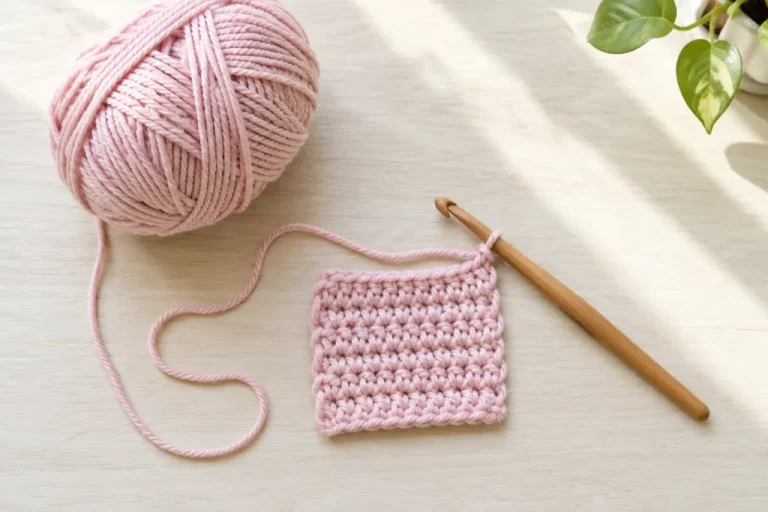
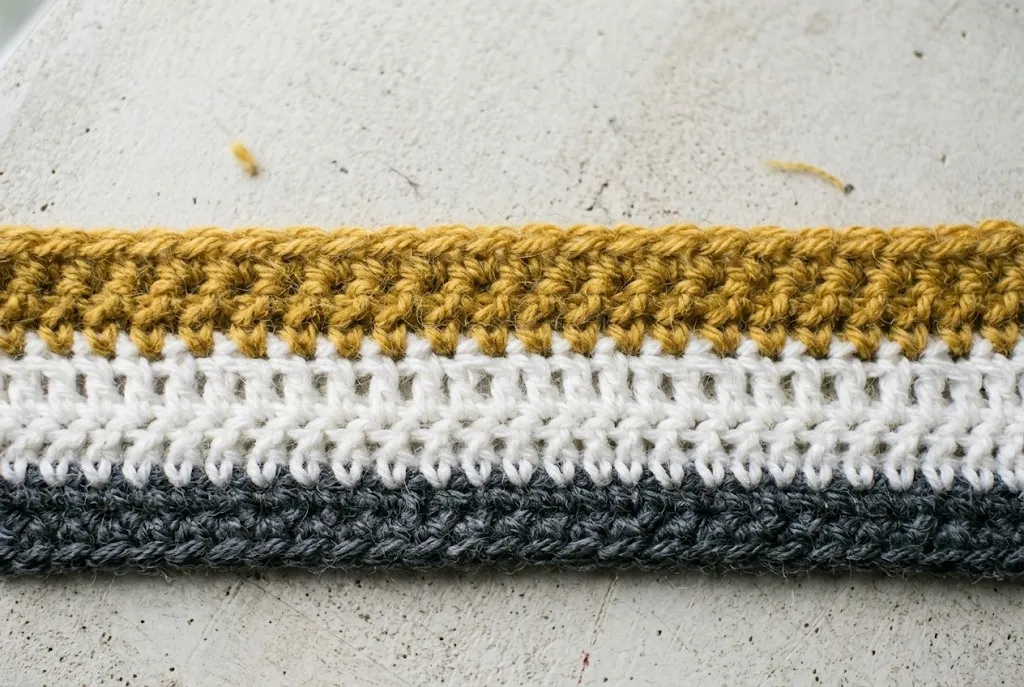
Single crochet is the row that matters most. It is dense enough to hide its neighbors, forgiving enough that beginner tension barely shows, and fast to work. Most crochet single stitch patterns online are rows of sc with a different hook size, which tells you how adaptable it is.
Learn these five before you attempt anything decorative. This is the section of the crochet stitches chart worth printing first. Our basic crochet stitches guide for beginners covers the hand motions for each one, so use the table as reference and that page as tutorial.
Texture and decorative stitches
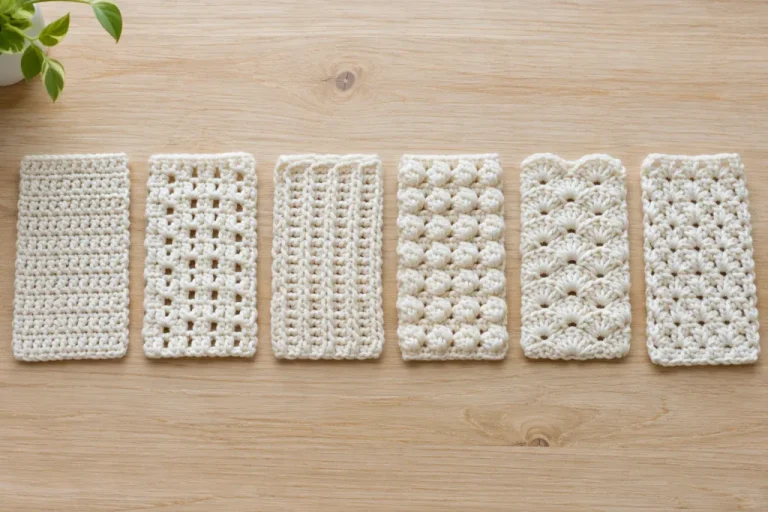
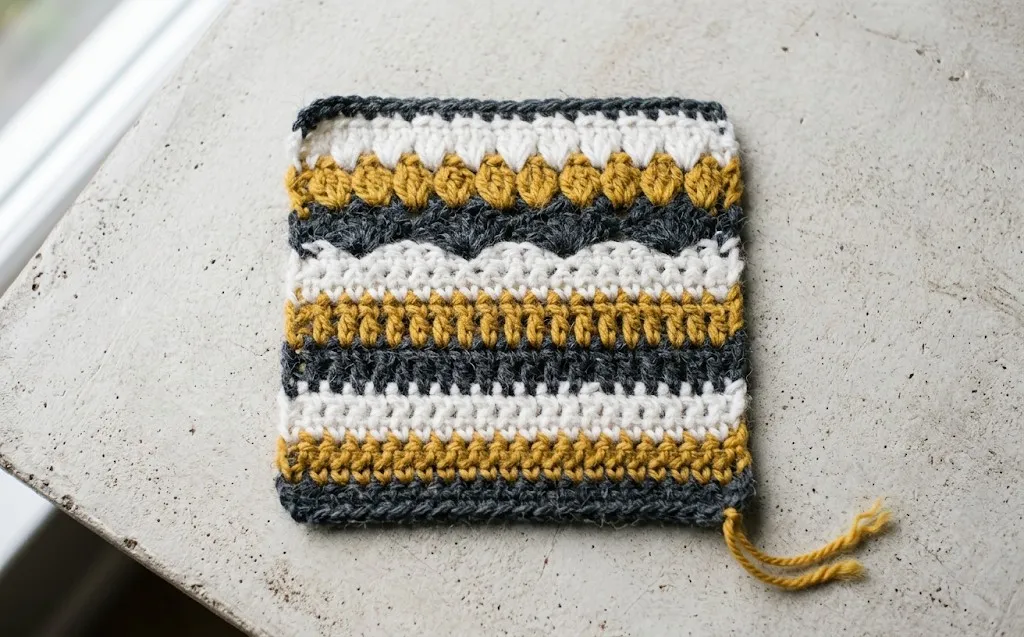
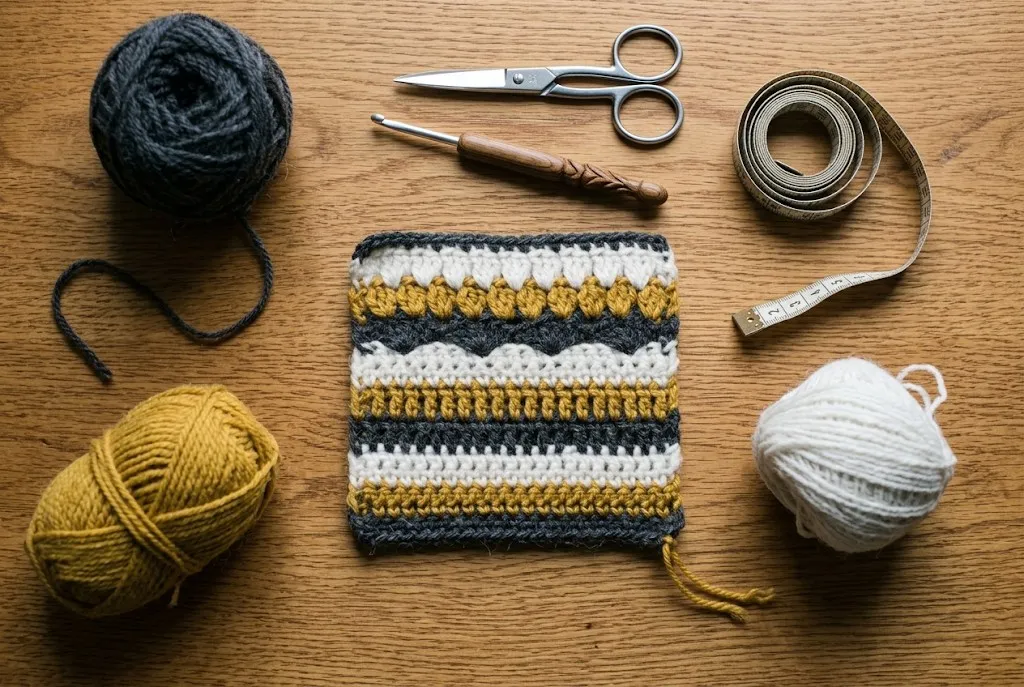
These nine rows are where texture lives. Each one gives fabric a surface you can feel with a thumb, and each one is pickier about yarn than the core five. Pick one row from the crochet stitches chart and work it twice. The second swatch teaches you more than the first.
| Stitch | Chart symbol | Best yarn weight | Difficulty | Time per swatch |
|---|---|---|---|---|
| Moss stitch, also called granite or reverse single | A short line with a dot, like a tiny stitch | DK or worsted, textured yarn | Beginner | 15 minutes |
| Cross stitch texture | A line with a small cross in the middle | Any, clearest in worsted | Beginner | 15 minutes |
| Shell stitch | Three or more fans nested inside one arch | Sport to DK so the fans stay open | Beginner | 20 minutes |
| Puff stitch | A small open circle, sometimes stacked | DK or fingering with a tight twist | Intermediate | 25 minutes |
| Bobble stitch | An oval with bumps stacked above it | Worsted, smooth, never fuzzy | Intermediate | 25 minutes |
| Popcorn stitch | A tall post with a fan burst on top | Worsted or bulky, firm yarn | Intermediate | 25 minutes |
| Cluster stitch | A group of tall stitches sharing one base point | DK or sport | Intermediate | 20 minutes |
| Crab stitch, reverse single crochet | A small oval with an arrow pointing back | Any, best on firm fabric | Intermediate | 20 minutes |
| Corner to corner | A tall stitch drawn through a diagonal loop | DK or sport, crisp cotton | Advanced | 40 minutes |
Time per swatch means a small square, roughly five inches, not a finished object. Most take under half an hour. If a stitch takes three tries to look right, make two more. Yarn is the cheapest part of any project.
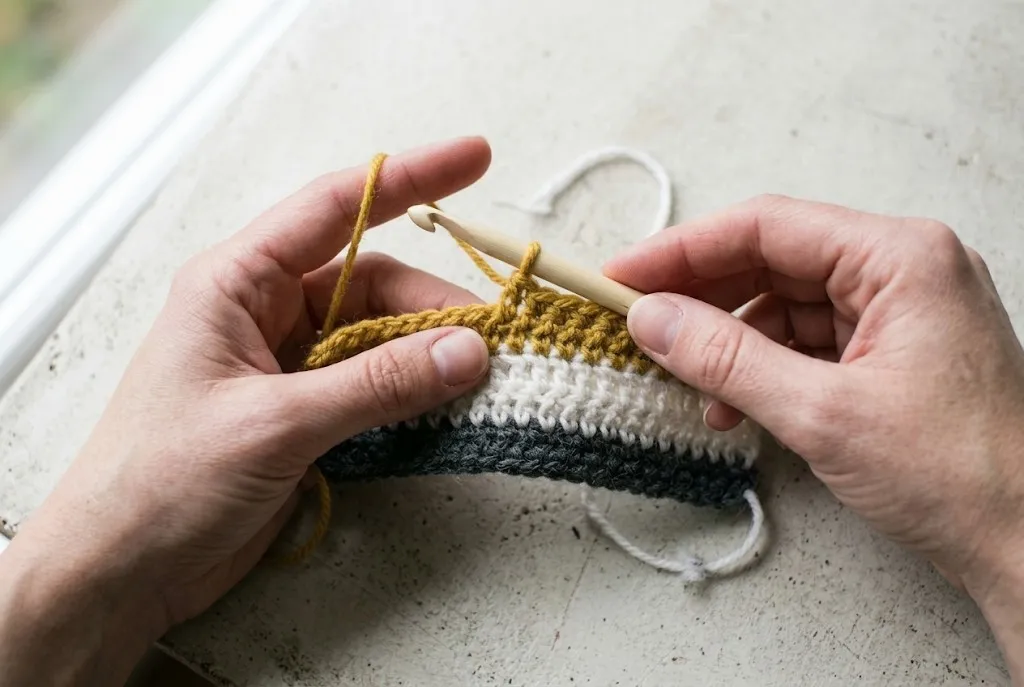
Not every row behaves in cheap yarn. Puff, bobble, and popcorn stitches disappear into a fuzzy acrylic or a budget mohair because the fibers swallow the shape. Puff tips also poke through the front of the work when the stitch is worked loosely, and blocking will not rescue that. Buy one smooth, tightly twisted yarn in DK and one in worsted, and every row of the crochet stitches chart becomes easier to judge.
How to read a crochet stitches diagram
Charts are read bottom to top and right to left under US convention, which is the reverse of how most people scan a page. Find the arrow first. The row it points to is the row you start with.
Each symbol tells you where the hook goes, not where the yarn goes. The top bar of a T shape is the front bar of the stitch below. The diagonal slash means wrap the yarn and pull up a loop. A cluster is three tall stitches sharing one base, so their symbols touch at the bottom.
Numbers are chains. A 3 at the start of a row means three turning chains, and those chains count as stitches only when the pattern says so. Most of the time they do not.
There is no single standard for these charts. Two designers can use the same symbol for different stitches, which is the real reason a crochet stitches diagram from a stranger can look confusing. When a chart and the written instructions disagree, trust the written instructions, since those are the version that got tested. Our guide to reading a crochet chart in ten minutes goes deeper on the software side.
Treat any crochet stitches chart as a map rather than a pattern. The pattern has the row counts, the increases, and the shaping. The chart only tells you what each stitch looks like from above.
Matching yarn weight to each stitch
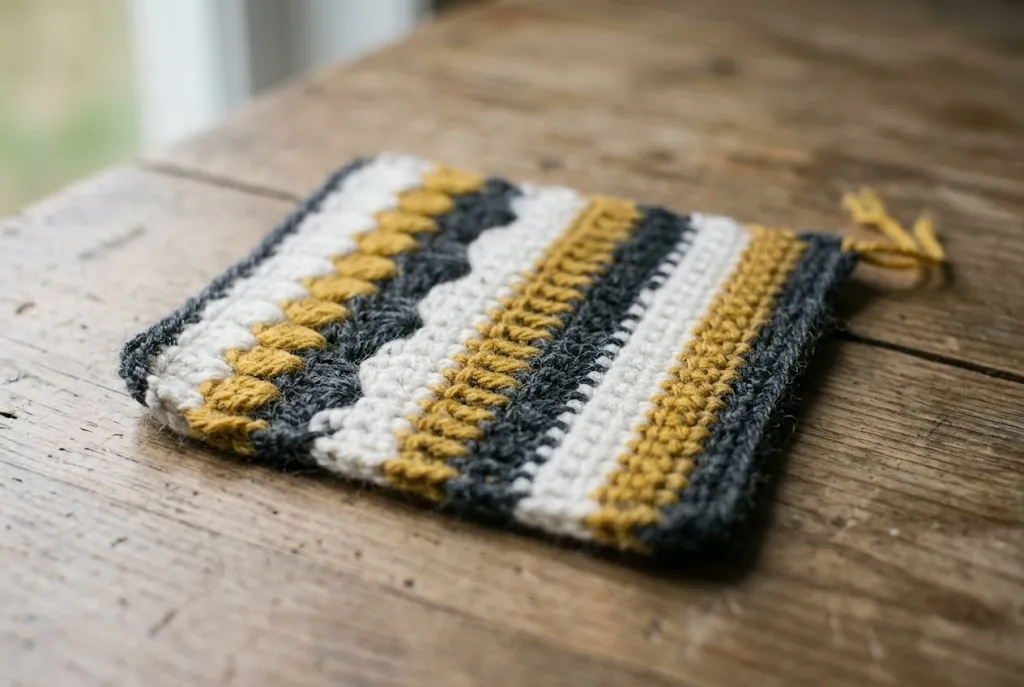
Every row of the crochet stitches chart names a weight it likes best. Sport and DK yarn makes single crochet look dense and makes puff and popcorn stitches read clearly. Worsted is forgiving and shows texture well. Bulky hides everything except shell and cluster, which is exactly why blankets use it.
Run a gauge swatch before you commit to any chart. Make a six inch square in the stitch you plan to use, wash it the way you would wash the finished item, then measure. Fabric that goes from four inches unblocked to four and a half blocked is behaving normally. That shift is where most of the frustration people describe comes from, and it has nothing to do with your skill.
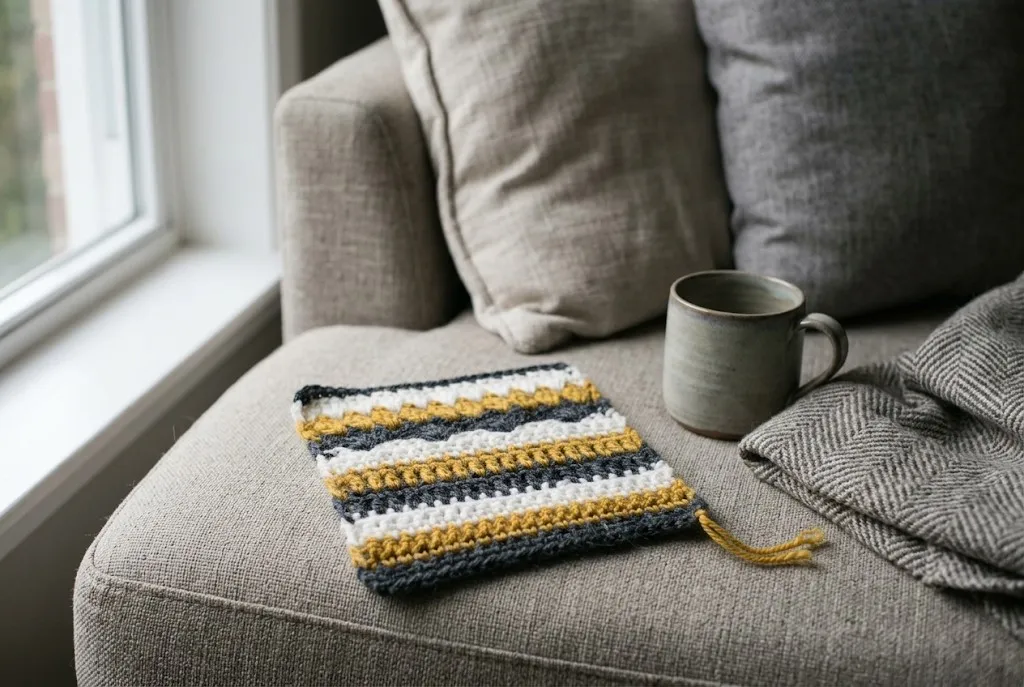
If you want to shop once, use the yarn weight system guide from the Craft Yarn Council and pick two weights, one smooth and one textured, in colors pulled from a single palette. Swatches photographed side by side make differences obvious that a swatch photo alone cannot.
Five mistakes worth fixing early
Tension that tightens. Most beginners pull the last loop through smaller than the first. Swatches come out narrower at the edges and the corners curl upward. Slow down on the back pull and watch the base of each stitch instead of the top.
Loop count drift. This hides until the fabric suddenly stops lining up three rows later. Count the loops on your hook before you pull through, on every row of the first swatch. Working into the space between two stitches instead of the stitch itself is the usual culprit.
Lumpy side edges. Turning chains and half double crochet tops build up a ridge along the edge. Use a foundation chain and one turning chain on dc rows, or slip stitch loosely down the edge when the pattern allows it.
Puff tips poking through. The puff was worked too loose. Drop to a hook half a size smaller than the fabric wants, work every puff in the same spot with the same tension, and block the swatch flat.
Crab stitch curl. Reverse single crochet always wants to spiral because you are working backwards into the stitches you just made. Work loosely, do not pull, and keep it to a firm panel rather than a whole blanket.
Crochet stitches chart questions
What is the difference between a crochet stitches chart and written instructions?
A crochet stitches chart shows the path of the hook from above. Written instructions carry everything the picture cannot hold: how many times to repeat, where to increase, how many stitches to skip. Read the instructions for structure and use the chart to confirm what a stitch looks like.
How big should a stitch swatch be?
Five or six inches across, or at least 20 by 20 stitches. Bigger if the stitch is bulky, since a small square of popcorn stitch tells you very little. Bind it off before measuring, and check that the edges lie flat without a wavy ripple.
Do I have to block every swatch?
Block when you want to compare two stitches fairly, since blocking changes height and hides nothing. Pin the swatch to a board or a thick towel with rustproof pins, wet it, and let it dry fully. Pinning to a towel alone often leaves the corners curling after a day.
Which stitches suit a first project?
Single crochet, half double crochet, and double crochet cover most of what beginners make, and moss stitch adds texture without any new technique. Save puff, cluster, and corner to corner for after your hands know how to keep an even tension. You can always pick them back up from this table later.
Where to go next
Pick one row of the crochet stitches chart, buy one smooth yarn in the weight that row recommends, and make it twice. When you are ready for a full project, our roundup of 15 easy crochet patterns for beginners and our list of cute free patterns for beginners both use these same stitches in real fabric.