How to Read a Graphgan Chart in 10 Minutes: Free Simple Guide
- In this guide:
- What a graphgan chart is
- How to read a graphgan chart in 10 minutes
- Changing colours cleanly
- Helpful tools
- Your first chart project
- Graphgan FAQs
A graphgan chart looks intimidating until someone decodes it once. Here is the whole secret of how to read a graphgan chart: each square is one stitch or block, and each colour tells you which yarn to use. That is it. In the next 10 minutes you will learn how to read a graphgan chart well enough to start a pixel blanket tonight.
Graphgans pair naturally with diagonal construction, so read our C2C crochet for beginners guide alongside this one. You will also want the basic crochet stitches fresh in mind, since single and double crochet carry most chart work.
What a graphgan chart actually shows
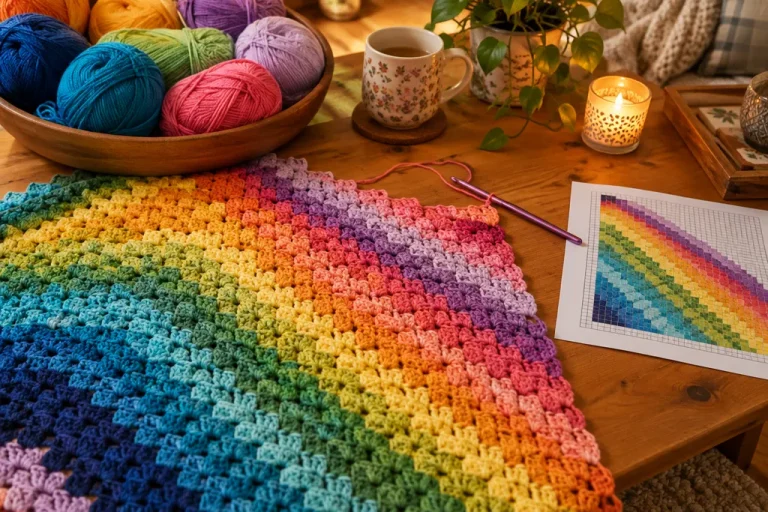
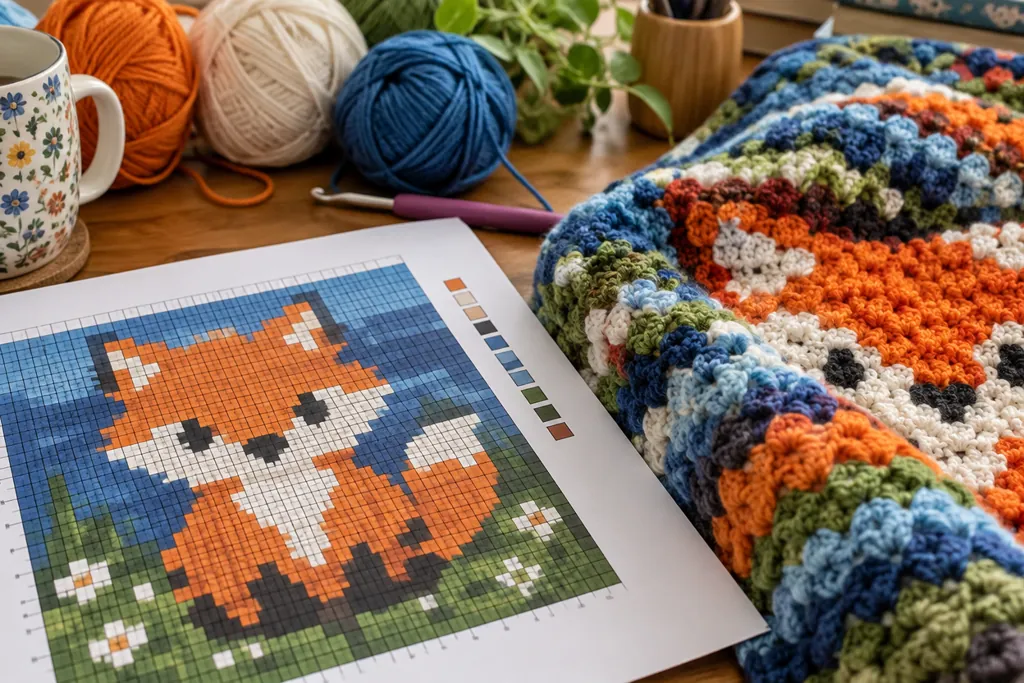
A graphgan chart is a grid where rows are crochet rows and columns are stitches. Read right to left on odd rows and left to right on even rows when working flat, exactly as your hook travels. C2C charts read diagonally instead, matching the corner-to-corner construction. The chart legend maps every colour to a yarn, and good charts number the rows down the side.
Charts come in three flavours: single crochet (one square = one stitch), double crochet, and C2C blocks (one square = one block). The technique changes the scale but never the reading logic. Once you learn how to read a graphgan chart in one flavour, the others feel instantly familiar.
How to read a graphgan chart in 10 minutes, step by step
Minute 1 to 3: orient yourself. Find row 1, note the reading direction arrow, and count the squares in the first row. That count is your foundation chain (plus turning chains). Highlight or cover all rows except the one you are working; a sticky note slid up row by row prevents the classic lost-place disaster.
Minute 4 to 7: work row 1 exactly as charted, calling colours aloud. Saying “three white, two black” keeps your place better than silent counting. Check off each finished row on a printed chart, or use a row-counter app that matches the chart’s numbering. This rhythm is the practical core of how to read a graphgan chart.
Minute 8 to 10: handle your first colour change. Drop the old colour, pick up the new one, and crochet over both tails for three stitches to lock them. No knots needed and barely any ends to weave. Congratulations: you now know how to read a graphgan chart well enough for real projects.
Changing colours cleanly in graphgan work
Carry unused colours along the row inside your stitches when the pattern returns to them within 4 stitches. For longer gaps, drop the yarn and pick it up on the way back, leaving bobbins hanging at the back. Tangled bobbins are the rite of passage here: wind small butterflies, not whole skeins, and park them in a shoebox with labelled slots.
Tension decides whether colourwork lies flat. New colours pulled tight pucker the fabric; carry them with the same slack as your stitches. If edges wave, your turning chains are inconsistent, not your colourwork. Experienced makers check the back as often as the front, because a tidy back predicts a tidy front.
Tools that make reading graphgan charts easier
A printed chart, a ruler and a highlighter beat any app for most makers. Highlight each finished row, slide the ruler up as you go, and tick row numbers in the margin. Digital users can screenshot the chart and mark it up on a tablet with identical effect. The method matters less than the habit of tracking every row.
Row counters, stitch markers every 10 stitches, and good lighting complete the kit. Count out loud on tricky rows; whispering colours keeps hands and eyes synchronised. With these small tools, how to read a graphgan chart stops feeling technical and starts feeling rhythmic.
Your first chart project: a heart square
Start with a 15×15 heart in two colours. It teaches reading, colour changes and finishing without committing to a blanket. Work it in single crochet for a dense potholder, or in C2C blocks for a cushion front. Either way, one evening proves the method before you invest in a big chart.
Yarn choice matters for pixel clarity: smooth, matte yarns in high-contrast colours read best. Fuzzy or variegated yarns blur edges that your careful counting earned. Check weights match using the yarn weight system chart so every colour works to the same gauge.
How to read a graphgan chart: FAQs
Do I read charts differently for C2C?
Yes, diagonally: each diagonal row of squares is one C2C row. Start at the corner the pattern indicates, increase to the widest diagonal, then decrease. Our C2C guide pairs perfectly with chart reading practice.
What if I lose my place?
Count stitches in the last completed row against the chart row. Stitch markers every 10 stitches make recounts trivial. Most lost-place panics resolve in two minutes of calm counting, so resist frogging before checking.
Can I turn any image into a chart?
Yes, with pixelation tools that reduce images to a grid in your stitch count. Limit colours to 5 or fewer for sanity. Simple 8-bit style art converts best, which is why game sprites dominate graphgan galleries.
You learned how to read a graphgan chart in 10 minutes: orient, read in hook order, change colours cleanly, finish small first. Pick the heart square tonight and join the pixel blanket makers.