Crochet Patterns for Beginners: 15 Easy Free Projects
- In this guide:
- What makes a project beginner friendly
- Easy crochet projects that finish in one sitting
- Beginner projects grouped by yarn fiber
- Your starter supply list on a budget
- The four stitches to learn first
- How to read a pattern before you start
- 15 free crochet patterns for beginners, labeled honestly
- Yarn weight, hook size and palettes
- Where these projects fit at home
- Four ways beginners get stuck
- What to learn next, in order
- Build your own starter kit
- Frequently asked questions
- Your first week plan
Choosing crochet patterns for beginners is easier once you know what actually makes a project beginner friendly, and it has less to do with difficulty labels than most pattern lists let on. Short rows, a small stitch vocabulary and a project you can finish in one sitting matter far more than a complicated photo of a blanket.
Below you will find 15 free patterns, each with its designer, an honest time estimate, the stitches it asks you to learn, and a note on what it will not teach you yet. Start with anything under 30 minutes, then move up to the hat and the shawl once your hands remember the rhythm.
What makes a project beginner friendly
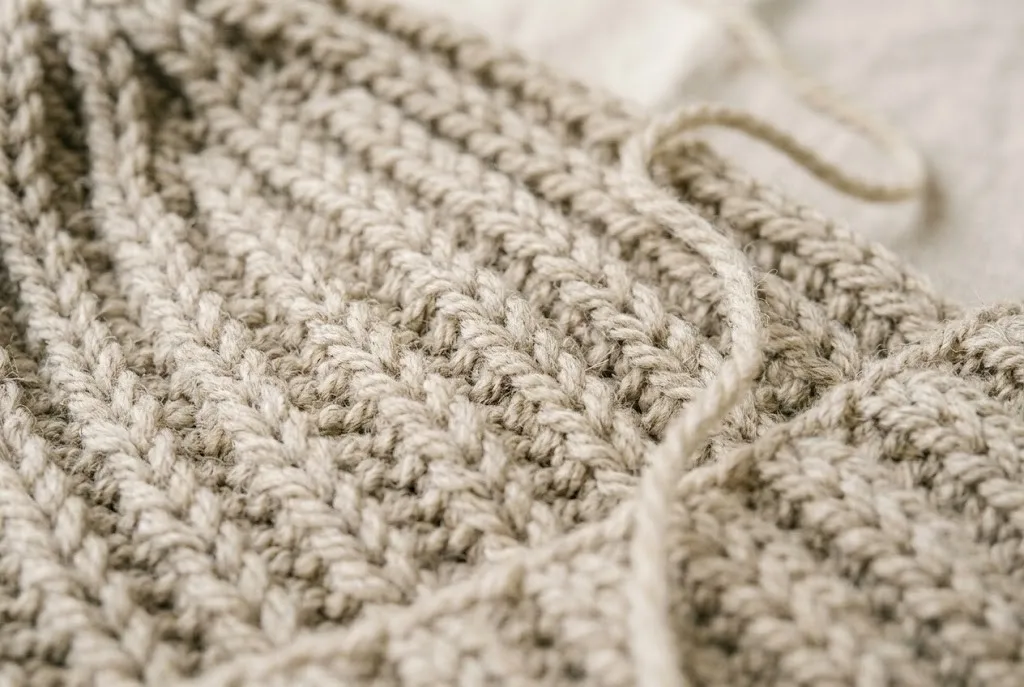
A beginner friendly project has three traits. You can see the whole thing on your lap. You can fix a mistake without unpicking half of it. And it uses a stitch vocabulary small enough to remember on day one. Anything that grows in rounds or in long repeating panels fails the second test, even when the pattern itself is very well written.
Size matters more than any difficulty rating. A one round coaster teaches a full technique in twenty minutes. A queen size blanket made from the same stitch teaches you gauge, reading and patience, which is a different project entirely and a fine one to save for later.
So when you browse crochet patterns for beginners, sort by size before anything else. Coasters, bookmarks, headbands and mug rugs are your training wheels. Beanies, cowls and shawls come after that. The order matters, because a pattern that assumes you already know half double crochet feels impossible on day two.
Free printable, instant download
Crochet Patterns for Beginners: 15 Easy Free Projects
- Colour palette card
- Shopping list
- Stitch cheat sheet (US and UK)
- Row counter and project tracker
Easy crochet projects that finish in one sitting
The fastest way to build confidence is a project that ends before you lose interest. That is what makes easy crochet projects such a good first step, and it is why the quick wins below come first. A coaster, a snowflake or a head band all share the same shape. Short rows, three or four stitches, and a finished object small enough to sit on the table in front of you while you work on the next one.
Pick two and make them back to back. Making a second small thing right after the first teaches you something a single project cannot, because you stop reading the pattern word for word and start recognizing the shape of a row. That shift is the whole point.
Budget thinking helps too. Each of these easy crochet projects costs less yarn than one skein, and the leftover yarn becomes a bookmark or a coffee sleeve rather than a stash you forget about.
Beginner projects grouped by yarn fiber
Most easy crochet patterns for beginners get sorted by size, and fiber is the other axis worth sorting by, because it decides how forgiving a project is.
- Acrylic. The cheapest practice fiber and the most forgiving. A slightly uneven stitch disappears into the fabric. This is where most of the quick motifs on the list below belong.
- Cotton. Crisp, clearly defined stitches and no stretch at all. It shows every wobble you make, which is useful for one project and frustrating for the next one.
- Wool. Warm and elastic, and it forgives uneven tension. A wool version of the same square looks softer and hides mistakes better than acrylic.
- Fine and light blends. Snowflakes and lacy motifs look best here, though the yarn is harder to see. Good light up a room and it takes real patience.
Whichever fiber you choose, the beginner projects for beginners advice is the same. Wash your swatch, because cotton and acrylic need blocking and wool does not care.
Your starter supply list on a budget
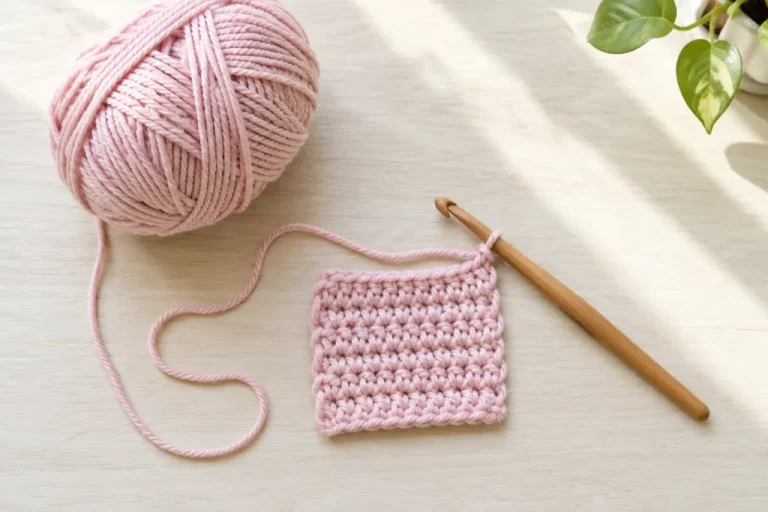
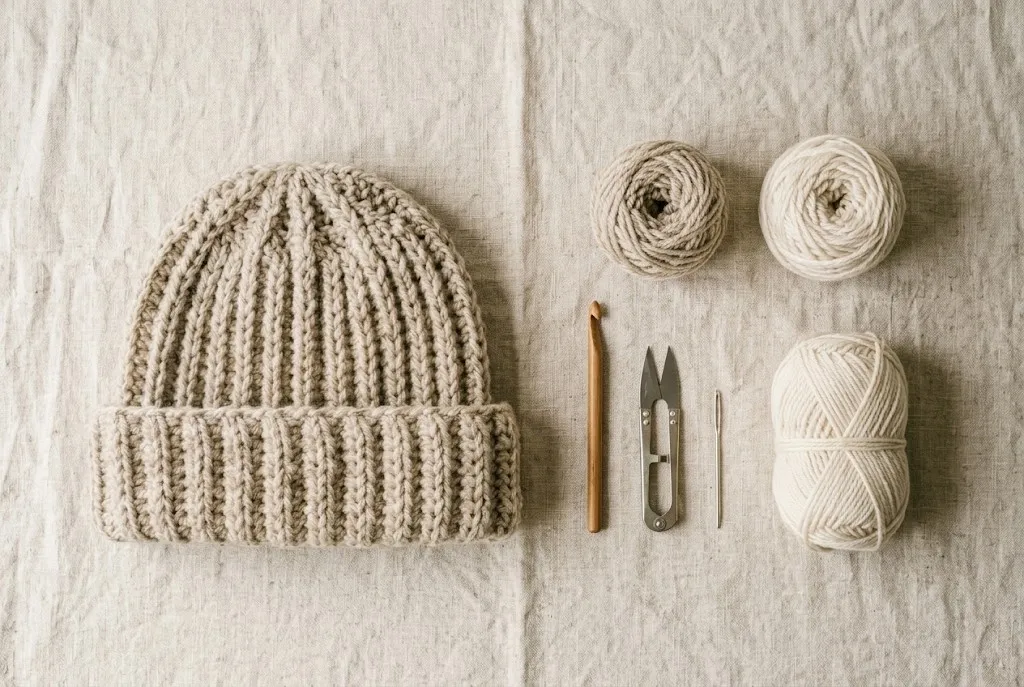
You can begin with very little. One 50 g skein of medium weight yarn, one hook, a tapestry needle, scissors and a stitch marker covers the first dozen projects on this list. Most beginners buy a whole palette on day one and end up with twelve skeins for two coasters.
Buy one color first. A mid weight acrylic or cotton in a shade you like is the least risky choice, and it is the easiest to read while you are still learning to judge stitch height. If you want wool, start superwash so you can hand wash a first attempt without tears.
Hook size is where beginners overthink. The yarn band gives a recommended range, often something like 4.0 mm to 5.5 mm for medium weight. Start in the middle, or one size up if you want a slouchier hat and faster rows. The Craft Yarn Council’s yarn weight system is the clearest way to decode what a band is telling you.
Budget shoppers do well with one hook set, cheap acrylic for practice, and a small project bag. Save the good yarn for the project you know deserves it. Every stitch name used across these crochet patterns for beginners is also in our guide to 10 basic crochet stitches.
The four stitches to learn first, and why
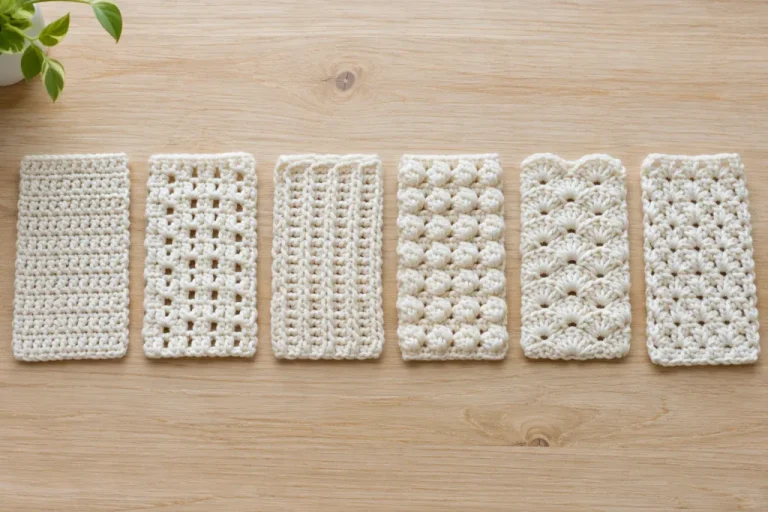
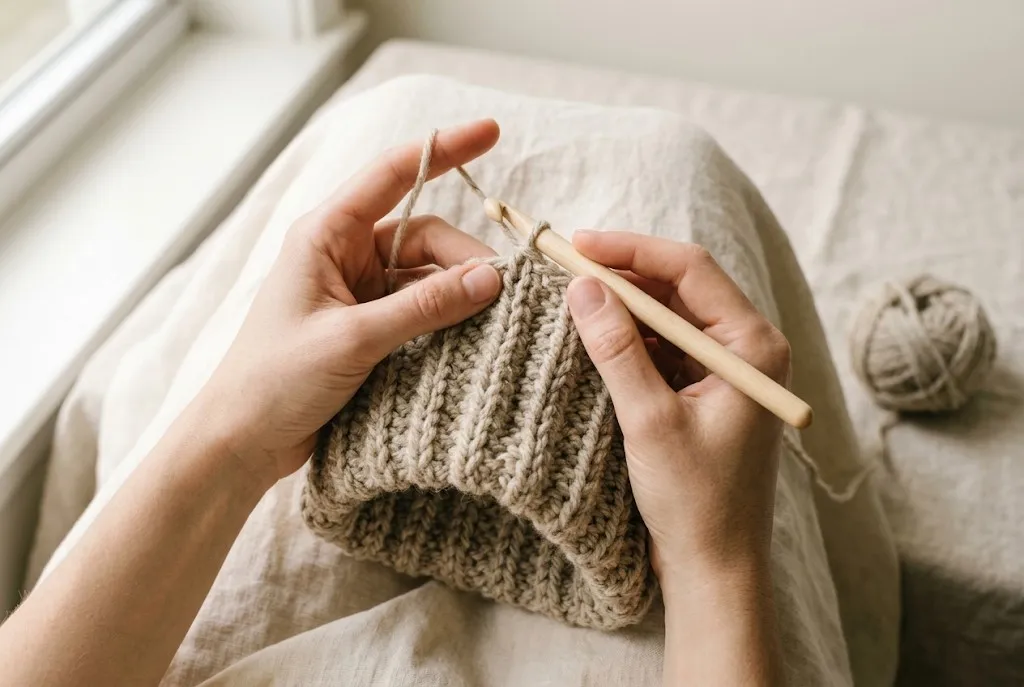
Chain, single crochet, half double crochet and double crochet cover nearly every project in this roundup. Chain builds the foundation and makes the loops everything else hangs from. Single crochet gives a solid, forgiving fabric that is easy to count. Half double and double grow much faster, which is why hats and bags finish in an evening.
Learn them one at a time and make a swatch for each. Ten rows of double crochet tells you more about your tension than any gauge note in a pattern, and a swatch costs five minutes. Our basic crochet stitch reference walks through each stitch with photos of the yarn path.
Do not skip the swatch even when the pattern feels simple. It is the single habit that separates crochet patterns for beginners that turn into finished objects from ones that end in a half finished basket.
How to read a pattern before you start
Patterns share a layout: materials, gauge, sizing, abbreviations, then the stitch sections. Abbreviations are the part that scares people. ch is chain, sl st is slip stitch, sc is single crochet, hdc is half double crochet, dc is double crochet. Learn those five and you can read most patterns in this roundup without a tutorial.
Gauge tells you how many stitches and rows fit a given measurement, usually 4 inches or 10 cm. If your swatch is off by more than a stitch, change hook size. This matters most in the hat and the bag, where fit is visible to everyone.
Sizing in a beginner pattern is often written as one size or as a finished measurement. Finished measurement is the honest one, and it is worth checking after blocking. A hat two inches too big still looks fine, which is exactly why hats are forgiving and cowls are even more so.
15 free crochet patterns for beginners, labeled honestly
Every pattern below is free, comes from the designer’s own page on Ravelry, and asks for a short stitch list. I have sorted them by sitting time rather than by cuteness. Times assume a beginner working in short sessions at normal tension, not someone crocheting for nine hours straight.
One note on crochet patterns for beginners like these. A pattern is only as clear as the person following it, so each entry says what a project asks of your hands and what it leaves out. Finish a cowl and you still will not know cables. That is fine, just know it going in.
Quick wins: 15 to 30 minutes
- Fast Circle for Beginners by Amy Solovay. A small round base worked from the center outward. It is the fastest way to learn the magic ring and joining rounds, and it doubles as a coaster. See the pattern.
- Hair Bow for Beginners by Annanitato Lolo. A small bow on a band or clip, built from chain and single crochet with a gathered middle. Great first make because the piece fits in one hand. The gathered center is the one new trick. See the pattern.
- Bow for Beginners by Annanitato Lolo. A scrunchie or ribbon style bow in the same family as the hair bow. Useful if you want to practice making several pieces and joining them together. See the pattern.
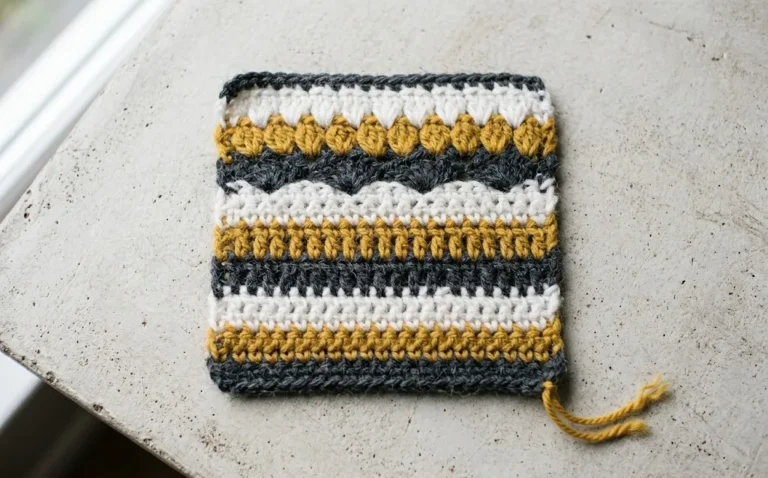
- Head Band Idea for Beginners by the stitch sharer. A simple band that works up in one evening, mostly a repeated row. Wear it while you make the next one. It does not cover colorwork, and does not claim to. See the pattern.
- Cord for Beginners by Annanitato Lolo. A narrow flat cord that becomes a drawstring, a bookmark or a key fob. It teaches even tension because a thin piece shows every wobble. See the pattern.
- Butterfly for Beginners by Annanitato Lolo. A small flat motif you can sew onto a bag or a blanket. Quick to finish and forgiving, since small errors disappear into the border. See the pattern.
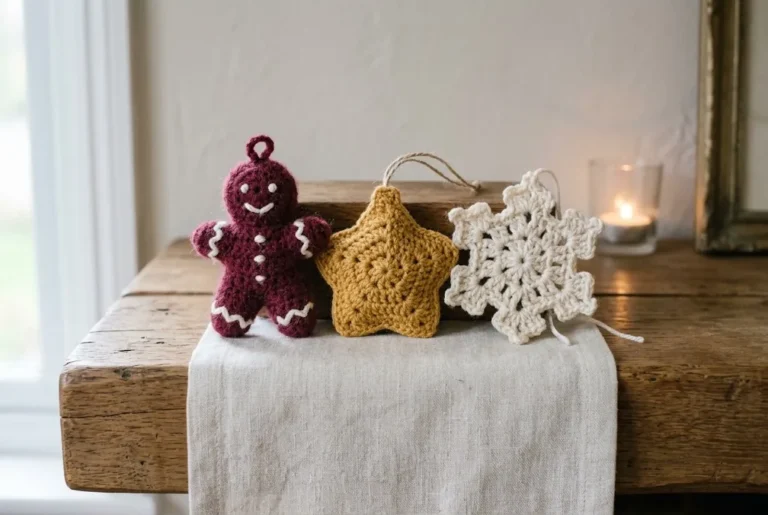
- Star for beginners by HappyCraft HQ. A flat star that puts increases and decreases to work in rounds. It is decent gauge practice, because every point has to match the others. See the pattern.
- Snowflakes for beginners by Silvana Hagiu. Flat lacy motifs that come together fast in a fine or light yarn. This is the traditional beginner project, and blocking is what makes them look worth hanging. See the pattern.
About an hour
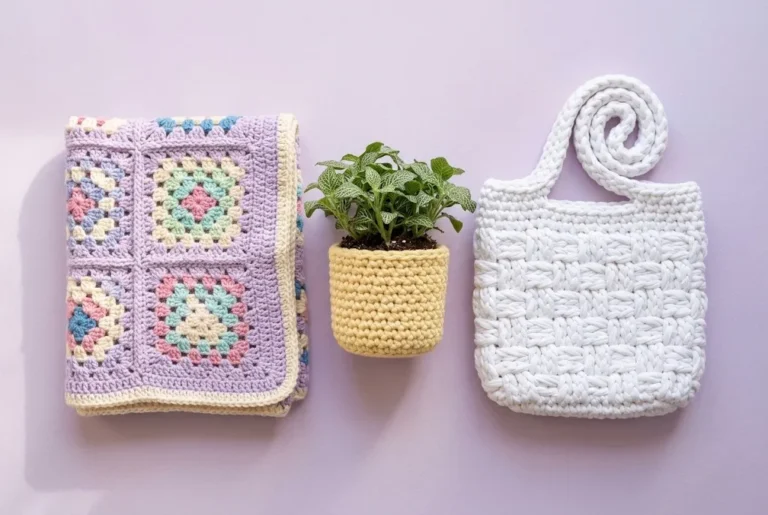
- Granny Square for Beginners by Bella Coco Crochet. The canonical beginner square, worked flat or from a center loop. If you make one thing from this roundup of crochet patterns for beginners, make the granny square. It shows you how squares join into a blanket, and most designers reuse the same motif again and again. See the pattern.
- Granny Square Crochet for Beginners by Shelley Husband. A longer version that carries you from a single motif into a joined panel or a wrap. It shows how squares behave once they are sewn together, which many roundups skip. See the pattern.
- Bag For Beginners by Littlejohn’s Yarn. A small bag or simple tote that grows quickly in a sturdy yarn. The handle technique is the part you will reuse forever. Worth doing in a firm yarn, since a soft one makes a sad bag. See the pattern.
One to three hours
- Cat for beginners by HappyCraft HQ. A small amigurumi cat worked in rounds with single crochet and a little shaping. This is the first project here that asks you to count rounds carefully and stuff a piece. A short overview of amigurumi covers the roots and the working style. See the pattern.
- Cowl for beginners by Rose Hudd. A neck cowl in a simple repeat, fast in a bulky yarn and hard to get wrong. This is your first project long enough to feel like real clothing, and the repeat is where you learn to read a written instruction properly. See the pattern.
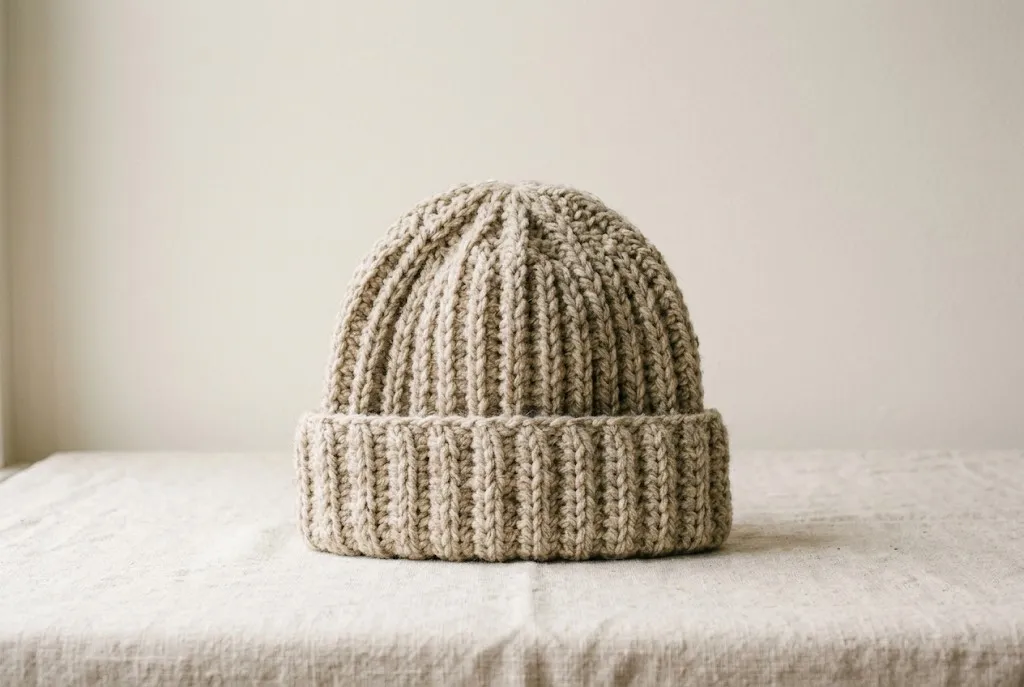
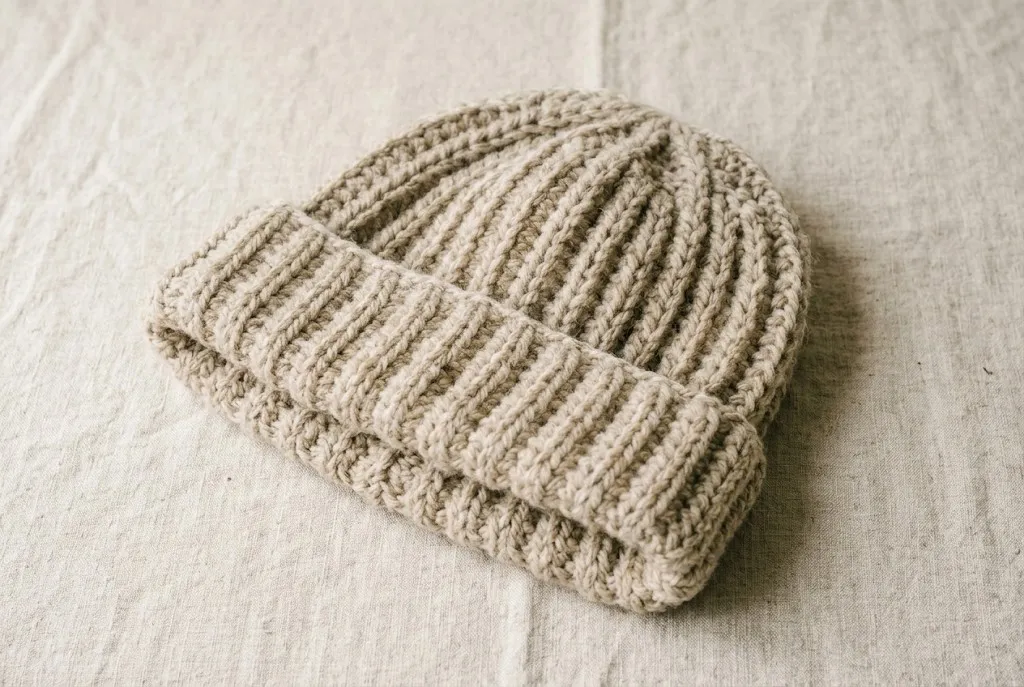
- Hat For Beginners by Joy of Motion Crochet, by Janne Kleivset. A beanie worked in the round with decreases at the crown. The first project here with a shape you have to get right, and the one beginners are most excited about. Swatch first, because gauge genuinely changes the fit. See the pattern.
- Shawl for beginners by Elisabeth Victoria. A long triangular wrap in a light yarn, built from a repeating row that grows as you go. Relaxing, hard to time, and the blocking at the end takes as long as the crocheting did. See the pattern.
Most of the crochet patterns for beginners in this roundup stop at flat pieces, which is why the cat is a genuine step up rather than just a cuter project. Start flat, then move to anything with a shape.
Yarn weight, hook size and palettes
Match the yarn weight to the project, not to the color you happen to love. Flat motifs like stars, snowflakes and butterflies look best in a smooth medium weight yarn where the stitch definition shows through. Granny squares and bags want a little more body. The cat and the hat hold their shape best in a firm yarn with minimal stretch.
Most of the crochet patterns for beginners here will look better in a solid color than in a variegated one, because a variegated skein makes your stitch count much harder to see. Oats, cream, warm grey and dusty blue do a lot of quiet work. They photograph well, they hide lint, and they let texture do the talking. If you want to plan matching pieces, the color sets in our free crochet flower pattern guide translate well to granny squares.
One warning about cotton. It has no stretch and no forgiveness, so a slightly tight stitch that would hide in acrylic makes a stiff hat in cotton. Wash your swatch if you plan to block.
Where these projects fit at home and in your bag
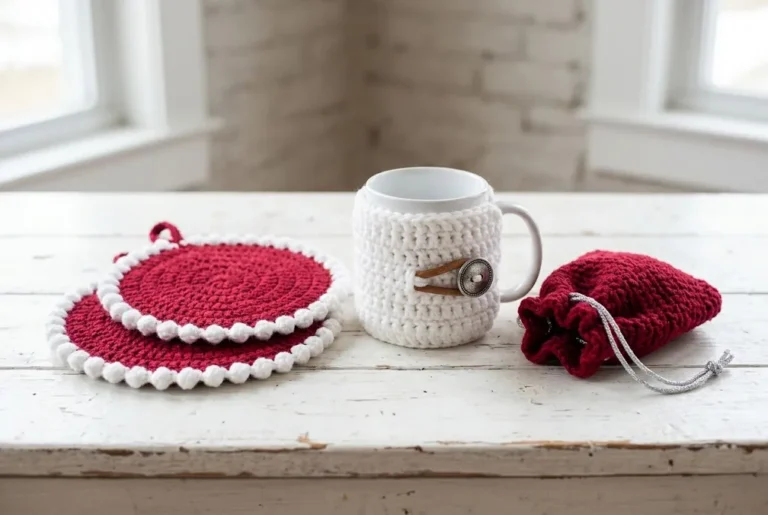
Small makes earn their place in ways big makes never do. Coasters and mug rugs protect the table you are sitting at. The head band keeps hair out of your face while you make the next one. Cord turns into a decent drawstring for a pouch, or a bookmark for a book you are actually reading.
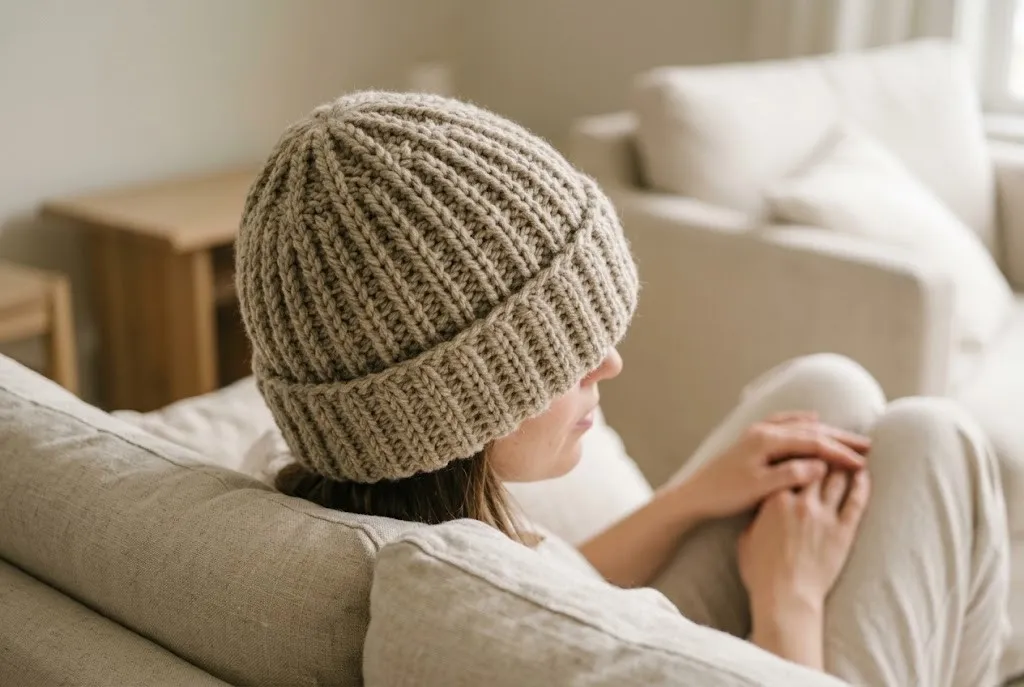
The best part of picking crochet patterns for beginners is that nearly everything here is visible within a day of finishing. A hat on a hook by the door gets worn. A blanket in a cupboard does not.
The cowl and the shawl are the pieces people notice first, and both are a repeating row or a simple round. The hat is the one people ask about. Sizing is forgiving, and ribbing is mostly a question of working in the right stitch. If you want a graphic square version later, our corner to corner crochet guide picks up from the same stitch vocabulary.
Give the small makes away. Four coasters or a batch of snowflakes cost yarn money and a weekend, and they are the easiest gifts you will ever finish.
Four ways beginners get stuck, and which pattern triggers each
Loose tension is the big one, and it is not a character flaw. Your hook is probably the wrong size for the yarn, or your hook hand is drifting as you go. Swatch, then step down a hook size if your rows come out taller than the band says. Tension hits the hat and the bag hardest, because both show unevenness.
Too many or too few chains. Chains are the foundation of the bow, the butterfly, the head band and the cord, and a wrong count in the foundation wrecks everything after it. Work the first ten slowly and count out loud. Nobody is watching.
Unraveling edges. Edges curl on flat motifs like the star, the snowflake and the granny square when the last stitch is pulled tight or the motif is worked as one continuous spiral. Block before you decide the shape is wrong.
Working in the round without noticing. The cat and the hat both use joined rounds, and a seam that is not slip stitched at the end of each round will spiral upward as you go. The fast circle is the right place to practice this before starting anything with a body.
None of this means you chose the wrong pattern. It means these are the exact spots where most people working through crochet patterns for beginners lose an evening, and each one has a fix. Ravelry listings usually carry comments too, so read the last few before you unpick anything.
What to learn next, in order
There is an order to crochet, and skipping ahead causes most of the frustration. Chain first, because everything else starts there. Then single crochet, which teaches stitch height and counting. Then half double, then double, where the fabric starts to grow fast and written patterns open up.
Once double crochet is automatic, the next three skills are working in the round without a visible seam, decreasing cleanly, and reading a chart. Those unlock hats, toys and blankets. Our basic stitch reference and graphgan chart guide cover the last one.
| Stitch | What it gives you | Where it takes you next |
|---|---|---|
| Chain | Loops and edges | Every foundation row |
| Single crochet | Solid fabric, easy counting | Squares, motifs, toys |
| Half double crochet | Height with a soft drape | Cowls, scarves, warm pieces |
| Double crochet | Fast growth and structure | Hats, bags, blankets, shawls |
Four stitches is genuinely enough to make almost anything in this roundup. When those four are automatic, most free crochet patterns for beginners stop looking intimidating, because you are reading rows instead of decoding them.
Build your own starter kit
Before you buy anything, put four pages of paper on the table. It sounds old fashioned, but every pattern in this roundup asks for the same four things, and writing them down saves a second trip to the shop.
- A shopping list. One medium weight yarn, a hook, a tapestry needle, scissors and stitch markers. That is the whole list for every project here.
- A stitch cheat sheet. Write ch, sl st, sc, hdc and dc on an index card and keep it in the yarn bag until you stop needing it.
- A yarn palette. Pick three colors that go together and buy one skein of each. Three skeins cover a set of coasters, a batch of snowflakes and one hat, so you always have a matching yarn in stock.
- A gauge guide. Ten rows in your main yarn, measured, pinned, and kept with the label. When a pattern asks for a specific stitch height, check the swatch instead of guessing.
Photograph the swatch and the first finished object. Six months in, you will not remember which hook size gave what result, and your future self will thank you for the note.
Frequently asked questions
What is the easiest thing to crochet?
A small circle or a single granny square. Both are small enough to finish in one sitting, both use two or three stitches, and both let you see a mistake quickly instead of discovering it three rows later. Our fast circle pick is the best ten minute win.
How do I start crochet step by step?
Start with a slip knot, then chain about twenty, then work back along the chains with single crochet. Do that every day for a week. You are training two things at once: holding the yarn and counting. The full 7 day starter guide lays out the rest of the week.
How do I crochet for beginners with no experience?
Buy one skein, one hook and a needle, then make three swatches in chain, single and double crochet. That is the whole setup. Everything else you read in crochet patterns for beginners assumes you have done exactly that first.
How many stitches should a beginner learn before starting a pattern?
Four. Chain, single, half double and double cover the whole roundup above. Anything beyond that is a nice surprise, not a requirement. You can learn new stitches one at a time as each project asks for them.
Which beginner projects teach the most for the least yarn?
The granny square and the head band. A square teaches counting, joining and borders, and a head band teaches working a long row without losing your place. Both use less than half a skein, and both are easy crochet projects to repeat while you are still learning. They also rank high among beginner projects for beginners who want the fastest feedback loop.
How do I know if a free pattern is good for me?
Look at the finished photo, the stitch list and the finished measurement. If the stitch list is more than four rows of abbreviations, it is probably not a first project. If the pattern only says one size, and the shape is a circle or a square, you are safe.
Your first week plan
Day one, chain thirty then single crochet in rows until you can count without looking. Day two, the fast circle and one snowflake. Day three, a granny square, then join it to a second one. Day four, the head band. Day five, the bow. Weekend, the cat or the cowl, depending on how much yarn is left.
For the full walkthrough before you begin, our how to crochet for beginners guide sets out the same ladder in more detail. When you are ready for shaping, the 8 free amigurumi animal patterns build on the stitch vocabulary you already have.
The honest truth about crochet patterns for beginners is that the first three projects teach you less than you expect, and the fourth one clicks. Keep making small things. The hat comes later, and it comes easily.